
In January 2024, CEASE commissioned More in Common to help us understand the British public’s attitudes towards pornography.
Twenty-one per cent of parents of 11 to 13 year olds have talked to their children about pornography, despite 13 being the average age at which a child first sees it. The same polling found that 0% of the UK public think it is appropriate for children to see pornography at the age of 13 or under.
Parents were most likely to talk to their child about pornography when they were 14 to 15 years old, by which time two thirds of children have already been exposed to it.
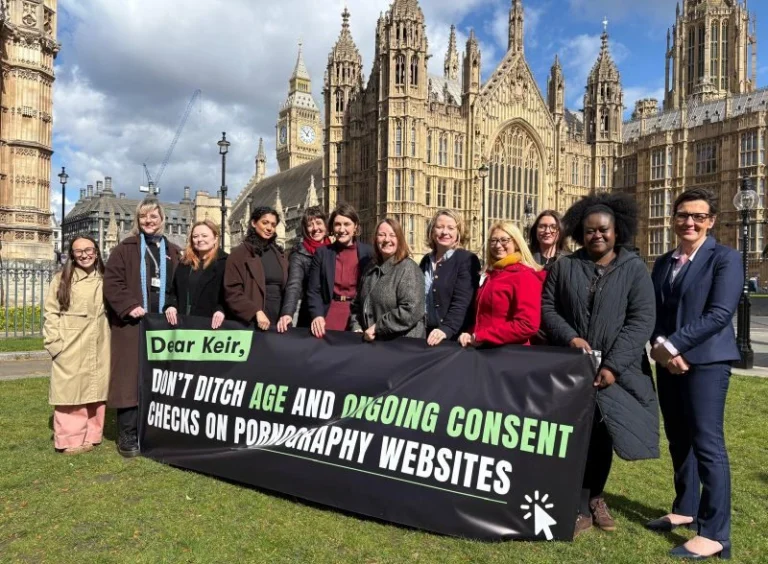
The burden of protecting children from the harms of online pornography must not lie solely with parents. The Online Safety Act (2023) mandates effective age verification on any website or social media platform that carries pornographic content. Yet in its guidance for the implementation of the Act, the regulator Ofcom is failing to clearly define “highly effective”.
By not defining what highly effective age verification is, Ofcom is not only failing to meet the mandate given to it by Parliament, it is also allowing the pornography industry a free pass to implement the weakest age verification method allowable, so that their profits are not hit too hard by the loss of underage visitors to their sites.
Given the number of lawsuits in action against Pornhub and its parent company, Aylo, for trafficking and profiting from the filmed sexual abuse of others, we are calling on Ofcom to set the bar for age verification, and set it high. The pornography industry has had countless opportunities to implement robust age verification to prevent children from accessing their material, but they have repeatedly chosen profits over basic safeguarding. I know how difficult it can be to talk to our children about sex, relationships and pornography. But if we don’t educate our children about sex, the pornography industry will.
Dr Lucie Moore, then Chief Executive of CEASE
Who is most critical of pornography
Women who are most likely to experience the harms of pornography, such as misogynistic attitudes and behaviours and the normalisation of violence during sex, are most likely to be porn-critical.
There is a generational and gender split on the harm of pornography to adults. Sixty-nine per cent of Generation Z women (aged 18 to 26) see accessing pornography as harmful, compared to 49% of men in Generation X (aged 43 to 58).
What the public thinks
- 92% of the UK public think watching online pornography is harmful to younger children.
- 76% think watching online pornography is harmful to teenagers.
- 90% of 18 to 26 year olds think online pornography has a major impact on what teenagers perceive to be normal sexual behaviour.
- 18 to 21 was the age range most frequently selected as appropriate to first be exposed to pornography.